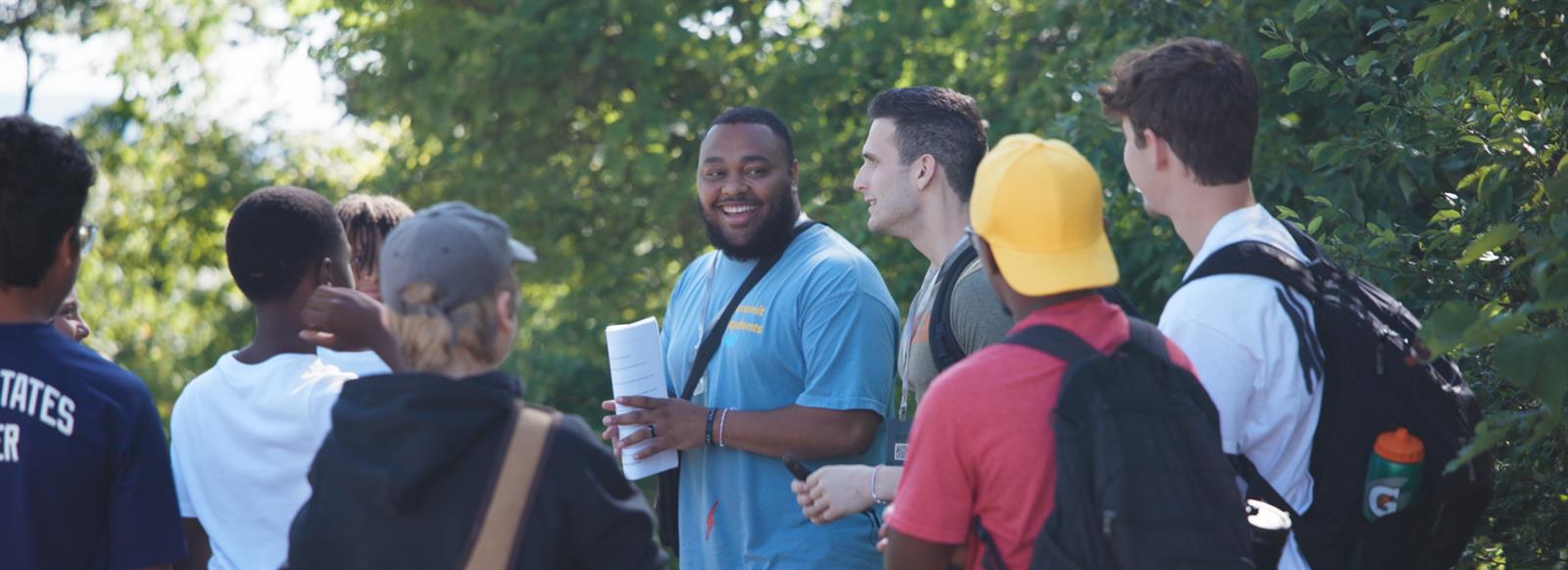
At the Summit Institute, young leaders are not just studying ministry; they are leading worship, discipling students, helping baptize new believers, and preparing to plant churches around the world. Director Blair Waggett shares that through mentorship, theological training, and hands-on ministry experience, they are being formed and sent to faithfully serve churches and communities worldwide.
Interview with Blair Waggett - Summit Institute
Hosted by Mike Easton
Mike: Blair, we are thankful for your time today and the years of partnership with the Summit Institute. It’s incredible to see the work you all have done that has led to church planting around the world. How did the Institute get started?
Blair: Our pastor, J.D. Greear, was overseas as a missionary for a season of life before becoming a pastor. This background gave him a different view of success in the church. He looked at success not simply by our seating capacity, but by our sending capacity. We believe the health of the church is better determined by who it sends than by who attends. So, we endeavored to pursue a vision of planting 1,000 churches in the US and around the world.
We knew, however, that we couldn’t do this without real investment in developing leaders. Too many leaders in missions and church plants are prepared theologically but lack the leadership skills and character to be leaders who last.
As we were looking to start this endeavor, Pastor J.D. connected with a guy named Mike Calhoun. Mike had spent his 30+ years developing young leaders not only in their theology but also in their leadership skills and character. Mike came over to the Summit and helped develop the Summit Institute.
Mike: I’ve had the opportunity to meet Mike Calhoun. He’s the perfect guy to help young leaders meet their ambition with Godly character.
What is the scope of the Summit Institute?
Blair: We have a 9-month Apprentice Program and a 2-year Residency to meet the needs of leaders with varying leadership styles and life situations. The Apprentice Program is more for those who are initially exploring a ministry calling but want to stay bivocational for a season. The Residency is for those who feel more clearly called to a ministry opportunity.
In both tracks, there are elements of theological education, leadership, character development, and hands-on ministry experience. We believe that it is important not only to have theological education but also to apply those skills in a ministry environment. The Residency provides an incubator for them to learn, gain real experience, and make mistakes in a safe environment of feedback. The Residency is a learning opportunity combined with true leadership opportunities.
One of the important aspects of the Residency is raising support. It would be a challenge for us to fully support everyone who does the Residency. Practically speaking, by inviting the broader body of Christ in, we can train more Residents and send more out. Beyond the practical side of support raising is what it does in the hearts and lives of the Residents. Support-raising drives the Resident to trust in the Lord, reveals insecurities to be addressed, and develops skills they will use for the rest of their lives in ministry.
Through all these experiences, the Residency provides something like 10 years of sanctification in the two-year term.
Mike: So important. I’ve seen too many people with theological education who lack mentorship and a ministry incubation period. Without this, many have the potential to get run over by the responsibilities of the church, or they have had praise heaped on them too early, allowing their character to falter. You are all doing important work.
Who is someone that you believe has been positively affected by the Residency?
Blair: There are so many stories to share. One of our Apprentices this past year faced moment after moment of challenge, hardship, and setback. Several times, she has considered throwing in the towel. And rightly so. The circumstances that she's having to navigate in her first year of ministry leadership have been far beyond what most have to endure.
Through these difficult times, she has had the support and encouragement of the Summit Institute Leadership, mentors, and classmates. This has encouraged her to fight for joy and to seek the presence of Jesus. By God’s grace, she has persevered with dependence on Christ and has allowed others to carry her burdens. The lessons she has been learning through The Summit Institute haven’t just been theory; they have been applied in one of the hardest-to-reach professions. Through her joy and the support of others, the light of the gospel has shone in a dark place.
Mike: It’s so important for those going into difficult missional opportunities to be trained well and to have the support and encouragement of others, especially in their first few years of vocational ministry.
Switching gears, how has it been helpful to partner with Reliant for the Summit Institute?
Blair: It has been a must for us as we develop Residents. The work Reliant does helps us focus on the ministry aspect of the Residency by taking care of the logistical and financial details. Plus, we believe an important part of the Residency is learning to raise funds. No matter where they go in vocational ministry, they will have to raise money. Whether personally, for a non-profit, or for a church. Raising support from the beginning sets them up to be available for missional opportunities such as missions or church planting.
As I said earlier, raising money is such an important developmental piece for them. Tons of sanctification happen through that process. It connects the people they raise from to the mission.
There’s also no way that we could fully fund the development of residents, church plants, and overseas mission opportunities. Having Residents raise support enables the broader body of Christ to join the Summit Network's work.
We also enjoy the business side of ministry with people who truly love to see the gospel advance. Reliant has been more than a service, but a true partner.
Mike: It seems like you all send out a lot of people. How does that feel for your staff and members?
Blair: Being at a church like ours is like hugging a parade, and we love it. It’s hard to have those gospel goodbyes. But because we send many of our people out to work with our network, The Summit Collaborative, we get to periodically see and connect with them as they land in their vocational ministry. Super rewarding to see them move towards their missional opportunity, even when it means leaving our context.
Mike: What kind of ministry experiences have your Residents been able to be a part of?
Blair: They have experienced so much. At Easter, we had church in the basketball stadium at the University of North Carolina. As part of this church movement, they witnessed 375 people being baptized. But not just witness it; they were part of counseling those people to be baptized, and some were in the tank baptizing them.
Our Residents have been a part of leading worship at the Summit. Doing ministry to reach the college campus, international students, and so much more. They are not only being trained but are turning around and applying what they have learned.
Mike: So, what is next for the Summit Institute?
Blair: We have such a rich partnership with the Summit church-planting network. This coming year, we will see 11 churches planted. Each of those church plants will raise money. The Residents we send to those church plants are not only ready to lead but also come with financial support. This makes it easier for the church planter to add more staff in the beginning.
When the church plant reaches financial stability, we have Residents encourage their donors to join with someone new going through the Residency program. We want to see generational impact and generational investment in others.
Mike: Blair, thanks so much for your investment in the next generation. We can’t wait to see what God continues to do through the Summit Institute. It is a privilege to partner with you.